“The Summer Hikaru Died” Captivates AX 2025 — Interview with Chiaki Kobayashi (Voice of Yoshiki Tsujinaka)
At Anime Expo 2025, the North American premiere of “The Summer Hikaru Died” was met with an overwhelmingly enthusiastic reception. Despite being screened prior to its official broadcast in Japan, the anime filled the venue and left a deep impression on local fans. We sat down with voice actor Chiaki Kobayashi, who plays Yoshiki Tsujinaka, to hear his thoughts on the AX experience, cultural differences between fans, and what he hopes international viewers will take away from the series.
ー How did the atmosphere at AX feel to you?
Even though it was before the broadcast (*), I was really surprised that the venue was completely packed. There were even people who couldn't get inside, saying things like “Please let us in!” and that really caught me off guard, but I was also very happy.
Even though there’s a supernatural entity like “Hikaru,” “The Summer Hikaru Died” is a story that strongly reflects a Japanese rural village atmosphere, so at first I thought it might not feel very relatable to American audiences.
But maybe because of that—or maybe because there’s something else that transcends that—I don’t know, but seeing so many people showing interest in the series right in front of my eyes made me really excited to see how they’ll react once it starts airing.
(*The interview and panel were conducted prior to the anime’s broadcast.)
— You did get a sense like “Ah, this is how it’s being accepted,” right?
We held a screening event in Japan too, but I felt like there were way more people laughing here in the US. Even in tense scenes, if there’s anything remotely funny, everyone laughs. So I could really see that the way people enjoy entertainment is different from Japanese fans, and that was a lot of fun.
— What were you most looking forward to at AX?
The thing I looked forward to most was being able to directly feel the passion from the fans.
Even in Japan, I get to attend events for various works, but the atmosphere from the audience is different even between Tokyo and Osaka, you know? So when you're in another country entirely, the reactions are completely different, and that’s something I always enjoy seeing.
— It did feel like you were building the stage together with the audience during the talk panel.
They call out your name just because you answered a question—there aren’t many places in Japan where that happens (laughs).
— Have you participated in any other overseas events before? Do you notice any differences between Japanese and American fans?
Actually, I’ve never been to any overseas events aside from AX. So I guess I’m an “AX-exclusive international voice actor” (laughs).
As for differences between Japanese and American fans, I think Japanese fans also feel moved or laugh at the same scenes as American fans, but maybe because they’re more conscious of those around them, they don’t express it outwardly. So during events it can be hard to tell how they’re feeling, but when I read online reactions later, I go, “Oh, so they actually did enjoy it,” and feel reassured.
American fans, on the other hand, don’t worry about how others perceive them. If they think something’s funny, they laugh out loud. If they think something’s amazing, they’ll clap. They really show their emotions. For us on stage, when they do that, it really creates the feeling that we’re building the event together, and I’m very grateful for that.
— Was there any message or moment from overseas fans during the “The Summer Hikaru Died” panel that particularly stood out to you?
They clapped after every single question. Even when I answered in Japanese and the interpreter translated it into English afterward, they still applauded. Even during other panels, every time someone spoke, they’d get all excited and cheer and clap, and I felt an incredible amount of respect from the audience toward all the speakers.
That’s why it really felt like we were giving and receiving joy back and forth. Like, “Wow, if they’re enjoying this so much, I want to keep talking!” That kind of feeling naturally comes up. The applause and cheers really made me happy—definitely a unique trait of overseas fans.
— Is there any line or phrase you’d like to say in English for your overseas fans?
Everyone who came to the venue—didn’t we all spend the same hour or two together during the event? So whenever I do an event for a show I star in, I always hope that people go home thinking, “That was a special time, different from the rest of the day.”
So at the end, I like to do a call-and-response thing. In Japan, we do something like calling out
“Hikaru ga Shinda (Hikaru Died)” or
“Natsu (Summer).” But with the English title “The Summer Hikaru Died”, I wasn’t sure how to break it up for a call-and-response. Like, “Hikaru Died” sounds kind of violent (laughs).
In the end, we didn’t have time to do it, but I’d love to come up with a call-and-response for the English version of The Summer Hikaru Died and try it sometime.
— Finally, do you have a message for the fans?
Thank you once again for taking the time to read this interview. I’m truly a huge fan of this work myself, and I can say with confidence that it’s a story you’ll find genuinely compelling.
Although “The Summer Hikaru Died” takes place in a rural Japanese village that even I’ve never visited, I firmly believe it’s a series that people around the world can relate to and enjoy. I would be very happy if many of you could watch it and follow the journey of Hikaru and Yoshiki.
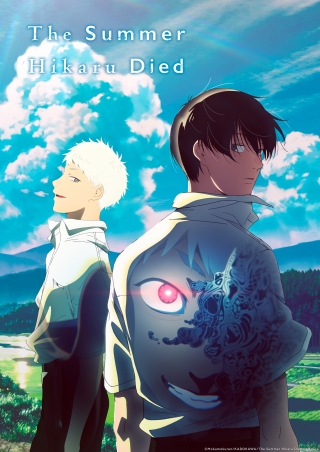
©Mokumokuren/KADOKAWA/The Summer Hikaru Died Partners